The Design Behind This Calm and Functional Kids’ Playroom
The Design Behind This Calm and Functional Kids’ Playroom
Designing a space for children is never just about furniture or color.
It’s about understanding how kids feel, focus, and unwind—especially after a long school day.
For this project, my client wanted to transform a dining area into a space that could gently support after-school life:
a place where children could slow down, do homework, explore creativity, and play—without the room feeling chaotic or overstimulating.
The challenge was to create a space that felt calm enough for learning, yet playful enough to invite imagination.
Starting With the Emotional Goal
Before making any design decisions, I focused on one key question:
How should this space make children feel when they walk in after school?
The answer was clear:
safe, calm, and supported.
Children often come home mentally tired. Loud colors, visual clutter, and poorly defined spaces can increase stress and reduce focus. This design needed to do the opposite—help their nervous system relax while still encouraging curiosity and engagement.
Using Psychology to Shape the Design
From a design psychology perspective, balance is everything.
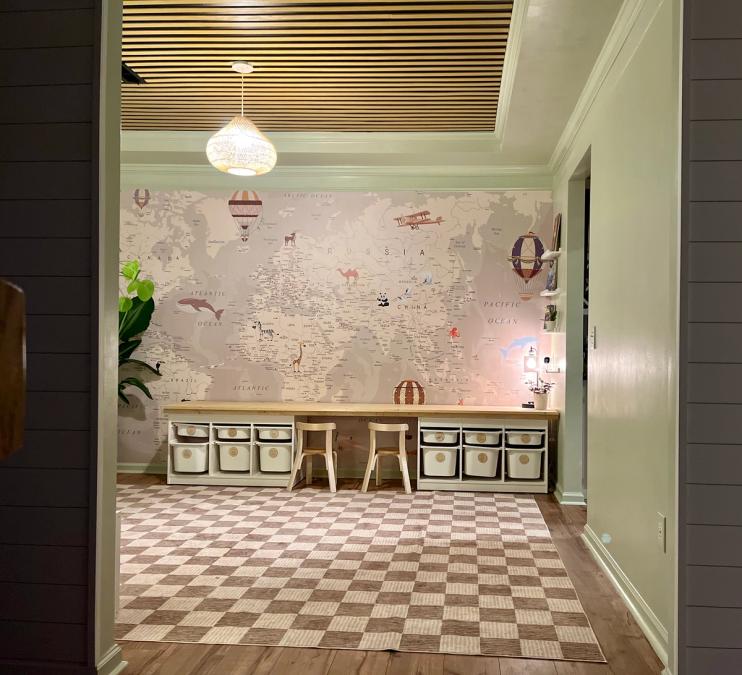
This room uses a soft, neutral base to ground the space and create a sense of calm. Neutral walls and flooring reduce visual noise and help the brain settle.
To prevent the space from feeling too plain or dull, we introduced a world map wallpaper designed to spark curiosity and learning. Designing for Focus, Creativity, and Play
The layout was intentionally kept simple and open.
A child-friendly table and seating create a natural zone for homework, drawing, and learning activities. The seating height and proportions make the space feel approachable and comfortable for kids, helping them feel confident and independent.
At the same time, the open floor area allows for free movement and play. This flexibility is important—children don’t move through their day in one mode. They shift from focused work to creative play, and the room needed to support both seamlessly.
Storage That Supports Independence
One of the most important elements of this design is accessible storage.
Low, clearly organized storage allows children to:
- Find what they need
- Put things away independently
- Transition easily between activities
When everything has a place, the room feels calmer—and children feel more in control of their environment. This reduces frustration for both kids and parents and helps maintain the calm atmosphere of the space.
A Space That Can Grow Over Time
This room was designed with the future in mind.
Today, it’s a calm after-school playroom and learning space.
As the children grow, it can easily evolve into:
- A shared family workspace
- A reading or creative studio
- A multifunctional dining and activity area
Good design isn’t about locking a room into one purpose. It’s about creating a flexible foundation that adapts to real life.
The Takeaway
Designing for children doesn’t mean sacrificing style.
It means designing with intention, empathy, and psychology.
This space proves that a kids’ playroom can be:
- Calm without being boring
- Playful without being chaotic
- Functional without feeling rigid
When design supports how children feel, everything else naturally falls into place.
Rather than using decorative patterns alone, the world map allows children to explore countries, recognize shapes, and connect visually with the world. The addition of gentle stick flags turns the wall into an interactive learning tool—encouraging creativity, storytelling, and early global awareness.
From a psychological perspective, this kind of purposeful visual engagement supports focus and curiosity without overwhelming the senses. The scale, color softness, and layout of the map were carefully chosen to stimulate imagination while maintaining visual harmony.
The result is a space that feels playful, educational, and calming—never distracting.
Keep in touch!